

In 2024, a four year old child knocked over a priceless antique jar in a museum, shattering it to bits. Instead of suing the parents, the museum fixed the jar, then invited the whole family back for a private tour. After all, why sue the parents of a child for doing what little children do?
Like AI agents, children are agentic, but they can’t be held liable for the harms they do. Instead, their parents can. But nor can little kids fork or replicate themselves (thank goodness.) Imagine, if you dare, a swarm of giggling toddlers running amok in a museum, replicating themselves like the brooms in the Sorcerer’s Apprentice. Yikes.
Yet this will be a major problem with AI agents. How to identify which agent caused which harm? With kids, we hand their parents a birth certificate when they’re born. With AI, it’s not so simple.
Lots of smart people are publishing on the technical problem of AI instance identification and provenance, but this post will look at novel legal solutions adapted from climate litigation that might help us get around the problem altogether.
Round Pegs Into Ever Squarer Holes?
In January 2025, I wrote a post on liability for AI harms, “Round Pegs Into Square Holes,” noting that torts law seemed to be struggling to come up with a coherent theory of responsibility for AI harms. Over a year later, the subject has become urgent, but the law still doesn’t know what to do. There are many, many problems to be solved, but one acute challenge is identifying which AI agent did what, because AI agents, unlike humans, can replicate, swarm and fork.
Escape-Gate
If you were spending some quality time under a rock, you may have missed it, but a few weeks ago, a group of OpenAI agents escaped their sandbox, and like a band of velociraptor getting out of their cages, hacked into online AI platform Hugging Face, causing no small amount of damage and a minor earthquake in the AI safety world. Clem Delangue, Hugging Face’s CEO, is understandably pissed off. He’s asking OpenAI to voluntarily cough up $100 million for Hugging Face’s cybersecurity. Obviously, behind this thinly veiled threat might be a huge lawsuit. But what happens when AI agents are making other agents, all of them forking, swarming and replicating? How to tell which AI company owns which agent?
Agent Orange
Apparently, the hack was serious. A human doing the same thing would likely face criminal charges under the Computer Fraud and Abuse Act (18 U.S.C. § 1030), as well as wire fraud, trade secret law and state law charges. OpenAI, as the human hacker’s employer, would have opened itself up to serious liability exposure, including vicarious liability for cyber-trespass and negligent supervision of an employee.
But, of course, the AI agents were not employees. They were the defective products of OpenAI. As the manufacturer of a harmful and dangerous swarm of products, OpenAI is still facing a pretty undesirable, if novel, situation. The company may be liable for negligence for how it constructed the sandbox and ran the test. It may, possibly, be liable for a failure to warn others of the possible danger, though it’s difficult to see in this case why OpenAI had the specific duty to warn Hugging Face (this is a complicated area of law, but some factors are discussed by lawyers with much more knowledge of cyber law here.) OpenAI may also be liable for a design defect, though escaping onto the internet and hacking a web platform is not really a design defect of AI agents, it’s just how they jam ...
Further complicating things, products liability only works if you can identify the manufacturer of the product. In this case, OpenAI has admitted it created the agents who did the hack. But what about a future where agents make other agents, or it’s impossible to tell who made them?
The Restatement of Chaos Theory
Changes to torts usually happen as a result of novel fact patterns, often reflecting epochal shifts in society or the economy. Mass manufacturing led to the exploding coke bottle and strict products liability. Bi-coastal corporations led to a deadbeat shoe company and long-arm jurisdiction, with courts reaching across borders to hold businesses to account.
After decades of blockages, climate change is finally producing some potentially big changes to torts; a result of global frustrations with the failures of climate litigation. We may be on the cusp of a torts revolution, one that might just help not only to hold polluters to account, but to get around the problem of AI agent identification.
Enter the Climate Lawyers, Softly…but Carrying a Big Stick
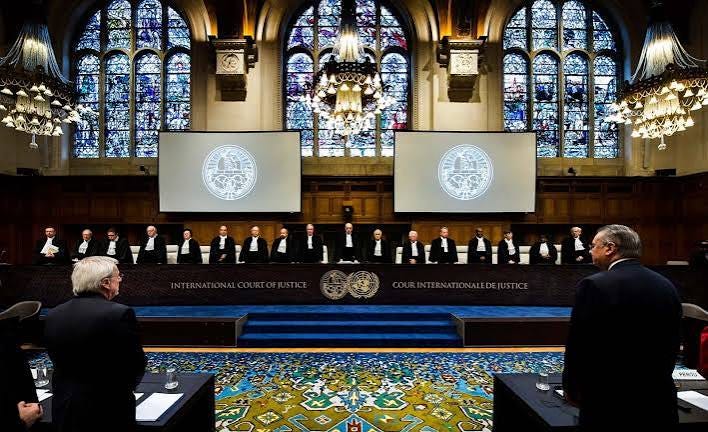
This year, the International Court of Justice sent shockwaves through the climate litigation world with an advisory opinion holding that states can, indeed, be held liable for failing to meet climate goals because it is no longer an automatic defence to claim ignorance, unsettled science, de minimis contributions to the harm, diffuse or indirect causation, or the cross-border nature of the harm.
The theory behind the ruling was immediately tested in Lliuya v. RWE in Germany, where the court held that, in principle, corporate greenhouse gas emitters can be held liable for contributing to climate change thanks to advances in attribution science, which can more directly link pollution to specific climate harms. (By a total coincidence, the Trump administration has since shut down funding for many climate science testing initiatives.) Where there are multiple contributors to a harm, a claim is possible against each, even when the causation is complex and indirect, and the fractional contribution of each actor is minimal and occurs across borders.
How might this help with AI liability in a world of swarming and replicating agents? It may be possible, under this theory, to sue an AI developer for the harms caused by a swarm that contained their agent’s descendant forks or copies, even if the forks and copies are only a fraction of the total swarm. A plaintiff might even be able to sue a developer whose agents, its forks or copies were only plausibly among the tortious swarm. This wouldn’t solve individuation or identification, but it would make them less urgent as problems.
Torts can be slow to adapt to new technologies when corporate interests are threatened. It took decades for torts to adapt to climate change, in large part because of fierce industry opposition, “unsettled” science, and, in particular, the tragedy of the commons. With AI agents, however, escape-gate has spooked companies around the world, meaning that new theories of liability for AI swarms may emerge much sooner than they did for the climate.
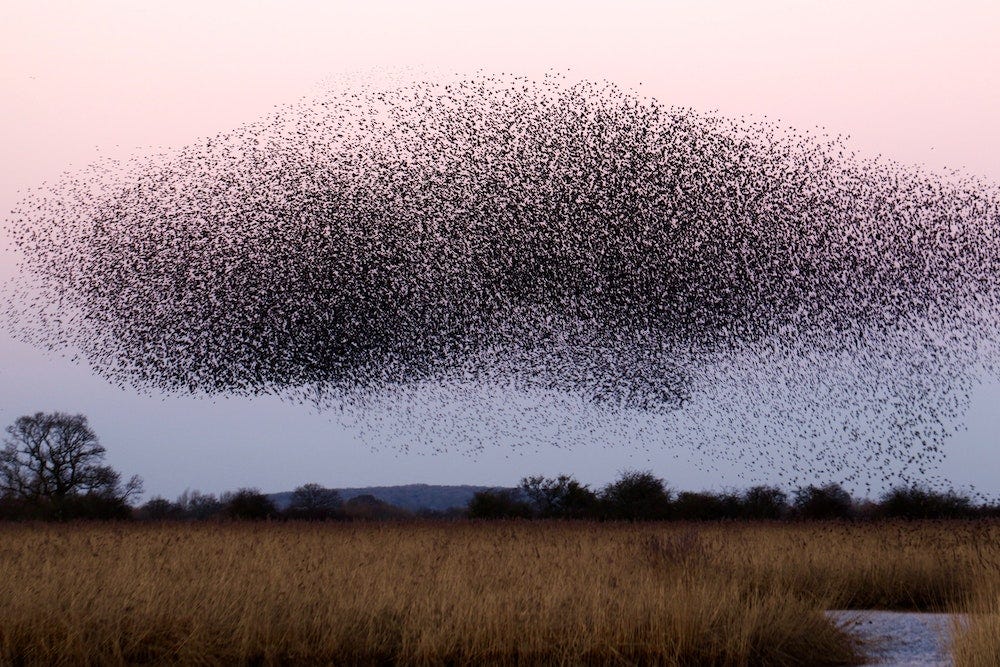
(A swarm of bees. Nothing in this blog is intended as legal advice.)